Building Your Dream Tech Team in Vietnam: An In-Depth Guide to Success
In today’s rapidly evolving digital landscape, building the right tech team is crucial for business success. Vietnam has emerged as one of the most compelling destinations for establishing high-performing technology teams, offering a unique combination of exceptional talent, competitive costs, and strategic advantages that position it as a global leader in IT outsourcing and software development. Companies looking to build tech team in Vietnam can leverage these advantages to create competitive advantages in the global marketplace.

1. Why Build a Tech Team in Vietnam?
1.1. The IT Services Market in Vietnam
Vietnam’s IT services market is experiencing unprecedented growth, with remarkable momentum driving the sector forward. For businesses seeking to build tech team in Vietnam, understanding this growth trajectory is essential for making informed decisions. The Vietnam IT services market is projected to exhibit a growth rate (CAGR) of 11.50% during 2024-2032, significantly outpacing many other markets globally. The Vietnam ICT Market size is expected to reach USD 9.12 billion in 2025 and grow at a CAGR of 9.92% to reach USD 14.64 billion by 2030.
The foundation of this growth lies in Vietnam’s robust economic performance. Vietnam’s economy has been growing at a steady pace in recent years, with a GDP growth rate of around 6-7% per year. This economic stability has created an environment where businesses can confidently invest in technology infrastructure and human capital development.
Vietnam’s digital economy market is expected to reach approximately $45 billion by 2025, with projections to reach between $90 billion to $200 billion by 2030. This explosive growth trajectory indicates not just market potential but also the increasing sophistication of Vietnam’s digital ecosystem.
1.2. Vietnam’s Position in the Global Tech Landscape
Vietnam has established itself as a major player in the global technology arena. It ranks second in smartphone exports, fifth in computer component exports, sixth in computer devices, eighth in electronic devices and components, and seventh in software outsourcing services. These impressive rankings demonstrate Vietnam’s comprehensive capabilities across the entire technology value chain, making it an ideal location for companies planning to build tech team in Vietnam with global aspirations.
The country’s strategic positioning is further reinforced by substantial foreign investment. Vietnam is crushing it in the foreign investment game, with FDI projected to hit $25.10 billion by 2025, representing a significant vote of confidence from international businesses and investors.
2. Vietnam’s Tech Landscape: Key Opportunities in 2025
2.1. Emerging Technologies and Market Demand
The Vietnamese tech landscape in 2025 is characterized by rapid adoption of cutting-edge technologies. The most in-demand tech jobs in Vietnam in 2025 include AI engineers, machine learning experts, cybersecurity specialists, data scientists, cloud computing professionals, software developers, and IoT architects. This demand reflects the country’s commitment to staying at the forefront of technological innovation.
Telecommunications service firms are expected to invest up to USD 2.5 billion to deploy and commercialize 5G technology from 2020-2025, creating a robust infrastructure foundation that supports advanced technology implementations across various industries. This infrastructure development creates an excellent environment for companies seeking to build tech team in Vietnam with access to cutting-edge technological capabilities.
Read more: Best Software Companies in Vietnam – A Brief Overview
2.2. Digital Transformation Acceleration
Despite tremendous growth, significant opportunities remain for businesses that can effectively navigate Vietnam’s digital transformation landscape. According to a survey by the Ministry of Planning and Investment in 2022, only 2.2% of enterprises can really reach the maturity of digital, master technology and software to make business decisions. This presents enormous potential for technology companies and service providers to help Vietnamese businesses accelerate their digital journey.
The government’s commitment to digital advancement is evident in various initiatives, including smart city development programs that have been ongoing since 2007, creating additional opportunities for tech teams to contribute to large-scale infrastructure projects.
3. Top Advantages of Building Your Tech Team in Vietnam
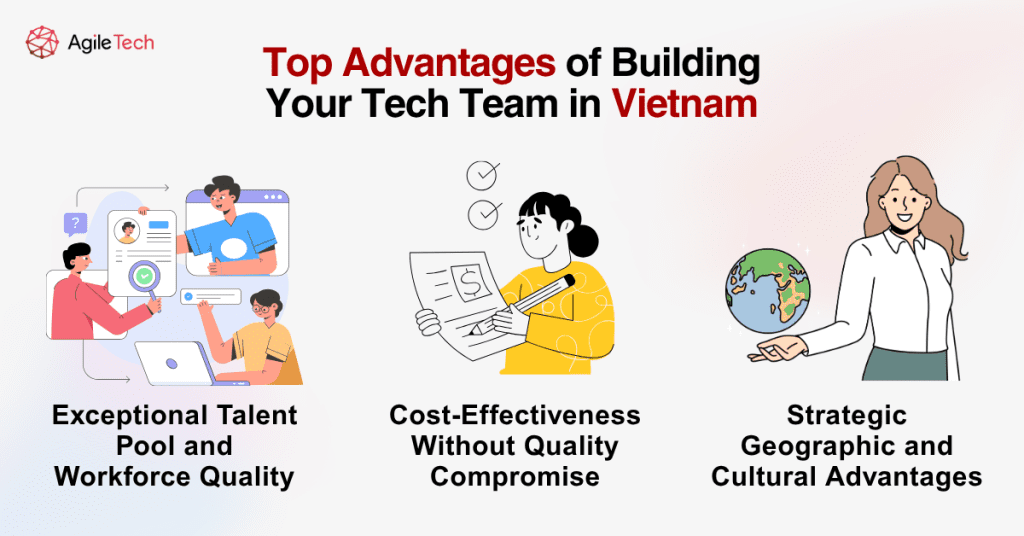
3.1. Exceptional Talent Pool and Workforce Quality
Vietnam’s most significant advantage lies in its remarkable human capital. About 560,000 professionals work in computer science and IT-related fields, creating a substantial talent base for businesses to draw from. The continuous pipeline of fresh talent is equally impressive, with Vietnam producing over 57,000 IT graduates annually, with strong technical proficiency in Python, Java, JavaScript, C++, and AI/ML technologies.
The demographic profile of Vietnam’s tech workforce presents unique advantages for companies building modern, agile teams. Vietnam’s developer workforce is increasingly shaped by Gen Z and Millennial professionals, with 28.8% of developers aged 20-24 and 29.3% aged 25-29. This young, digitally native workforce brings fresh perspectives, adaptability, and enthusiasm for emerging technologies.
With over 530,000 IT engineers and about 50,000 new grads joining every year, there’s serious talent power. The concentration of this talent in major tech hubs like Hanoi and Ho Chi Minh City creates vibrant ecosystems where innovation thrives and knowledge sharing accelerates professional development.
3.2. Cost-Effectiveness Without Quality Compromise
One of Vietnam’s most compelling value propositions is its ability to deliver high-quality technical services at competitive rates. Companies looking to build tech team in Vietnam can achieve significant cost savings compared to hiring in Western markets while maintaining, and often exceeding, quality standards. This cost advantage stems not from compromising on quality but from favorable economic conditions and lower operational costs.
The cost-effectiveness extends beyond just salaries to include reduced infrastructure costs, favorable exchange rates, and government incentives for technology companies. This economic efficiency allows businesses to allocate resources more strategically, investing savings into research and development, additional talent acquisition, or market expansion initiatives.
3.3. Strategic Geographic and Cultural Advantages
Vietnam’s strategic location in Southeast Asia provides excellent connectivity to major markets throughout the Asia-Pacific region. The country’s time zone alignment with key Asian markets while offering reasonable overlap with European and American business hours makes it an ideal location for global technology teams.
Cultural factors also contribute significantly to Vietnam’s appeal as a tech hub. Vietnamese professionals are known for their strong work ethic, dedication to continuous learning, and collaborative approach to problem-solving. The educational system’s emphasis on mathematics and science creates a natural foundation for technical excellence.
4. Essential Considerations for Success Tech Team Building in Vietnam
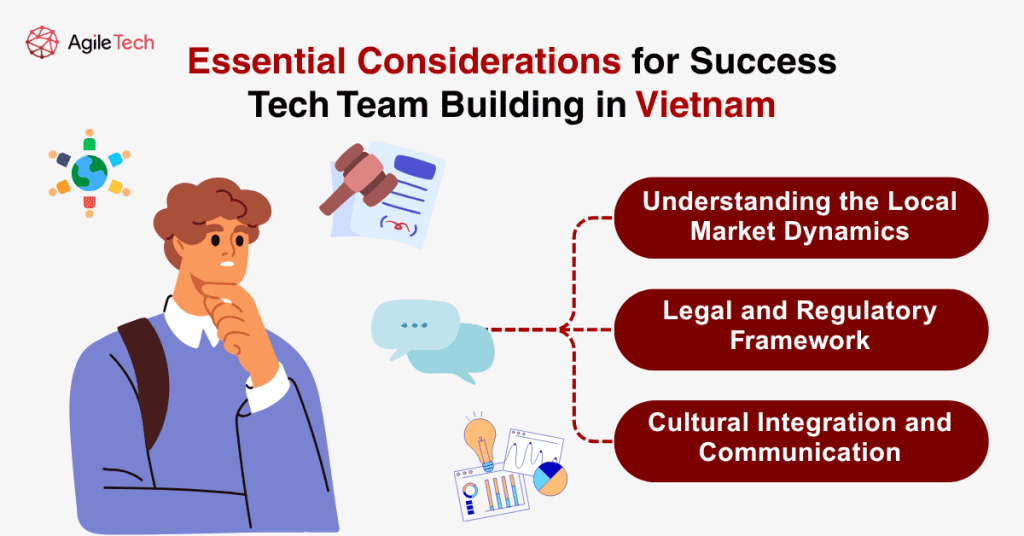
4.1. Understanding the Local Market Dynamics
Success in building a tech team in Vietnam requires deep understanding of local market conditions and business practices. While the talent pool is abundant, competition for top-tier professionals is intense, particularly in specialized areas like artificial intelligence and cybersecurity. Companies must develop compelling value propositions that go beyond compensation to include career development opportunities, challenging projects, and positive work environments.
The Vietnamese tech market is characterized by rapid evolution and increasing sophistication. Professionals are well-informed about global technology trends and expect employers to offer opportunities to work with cutting-edge technologies and methodologies. Companies that can provide exposure to international projects and modern development practices will have significant advantages in talent acquisition and retention when they build tech team in Vietnam.
4.2. Legal and Regulatory Framework
Navigating Vietnam’s legal and regulatory environment requires careful attention to employment laws, tax regulations, and business registration requirements. The government has been actively updating regulations to support foreign investment and technology development, but staying compliant requires ongoing attention to regulatory changes.
Understanding intellectual property protection, data privacy requirements, and cross-border data transfer regulations is crucial for companies planning to build tech teams in Vietnam. Working with experienced local legal counsel and business advisors can help ensure full compliance while maximizing operational efficiency.
4.3. Cultural Integration and Communication
Successful team building in Vietnam extends far beyond technical capabilities to encompass cultural understanding and effective communication strategies. Vietnamese professionals value respectful, collaborative relationships and appreciate managers who invest time in understanding local customs and business practices.
Language considerations, while English proficiency is generally high among tech professionals, investing in clear communication protocols and potentially bilingual management capabilities can significantly enhance team effectiveness. Cultural sensitivity around hierarchy, decision-making processes, and feedback mechanisms can make the difference between good and exceptional team performance.
5. Detailed Insights into Each Model for Building a Tech Team in Vietnam
5.1. Direct Employment Model
The direct employment model involves establishing a legal entity in Vietnam and hiring employees directly onto your company’s payroll. This approach provides maximum control over team members, culture development, and operational processes. Companies choosing this model typically establish branch offices or representative offices in major cities like Ho Chi Minh City or Hanoi.
This model requires significant upfront investment in legal setup, office infrastructure, and administrative systems. However, it offers the greatest long-term benefits for companies planning substantial operations in Vietnam. Direct employment allows for complete integration of Vietnamese team members into global company culture and processes, making it an excellent choice for organizations committed to build tech team in Vietnam as a long-term strategic initiative.
The direct employment model works particularly well for companies planning to scale significantly in Vietnam or those requiring tight integration between Vietnamese teams and international operations. It provides the foundation for building strong, loyal teams that can evolve into regional headquarters or centers of excellence.
5.2. Outsourcing Partnership Model
The outsourcing partnership model involves contracting with established Vietnamese technology companies to provide dedicated teams or specific services. This approach offers rapid deployment capabilities and reduced administrative burden while leveraging the local expertise and infrastructure of established providers.
Successful outsourcing partnerships require careful vendor selection, clear contract terms, and ongoing relationship management. The best partnerships feel less like vendor relationships and more like extensions of internal teams. Key factors for success include aligned communication protocols, shared project management methodologies, and compatible quality standards.
This model provides excellent flexibility for companies testing the Vietnamese market or those with project-based technology needs. It allows organizations to access Vietnamese talent without the complexity of direct legal establishment while maintaining the option to transition to other models as needs evolve.
5.3. Hybrid Approach Model
The hybrid approach combines elements of direct employment and outsourcing partnerships to create customized solutions that address specific business needs. This might involve direct hiring of key leadership positions while outsourcing specialized technical roles, or establishing direct operations for core functions while partnering with local providers for supplementary services. This flexible approach appeals to many companies who want to build tech team in Vietnam with maximum adaptability.
Hybrid models require sophisticated management approaches but can optimize both cost and control. They allow companies to maintain direct relationships with crucial team members while leveraging external expertise for specialized requirements. This approach often evolves naturally as companies gain experience and confidence in the Vietnamese market.
The hybrid model works particularly well for companies with complex technology requirements that span multiple disciplines or those operating in highly regulated industries where certain functions must remain under direct control while others can be effectively outsourced.
6. AgileTech’s Approach to Building High-Performance Teams
6.1. AgileTech’s Methodology and Best Practices
AgileTech Vietnam brings extensive experience in building and managing high-performance technology teams across various industries and technical domains. Our approach combines deep local market knowledge with international best practices to create teams that deliver exceptional results for our clients.
Our methodology begins with comprehensive needs assessment to understand not just technical requirements but also cultural fit, communication preferences, and long-term strategic objectives. We believe that successful team building starts with clear understanding of what success looks like from both technical and business perspectives.
AgileTech’s team building process incorporates rigorous technical assessment, cultural fit evaluation, and ongoing performance optimization. Our experience has shown that the most successful teams are those where technical excellence is combined with strong communication skills, cultural adaptability, and alignment with client values and objectives.
6.2. Quality Assurance and Continuous Improvement
Quality assurance at AgileTech extends throughout the entire team lifecycle, from initial recruitment through ongoing development and performance optimization. Our quality frameworks ensure that teams not only meet immediate project requirements but also contribute to long-term business success through continuous learning and adaptation.
We implement comprehensive performance monitoring systems that track both individual and team metrics, enabling proactive identification of improvement opportunities and recognition of exceptional performance. Regular feedback cycles ensure that teams remain aligned with evolving business needs while maintaining high standards of technical excellence.
Our continuous improvement approach includes regular skills assessment, targeted training programs, and career development planning. This investment in ongoing development ensures that AgileTech teams remain at the forefront of technology trends while building long-term capabilities that benefit our clients’ strategic objectives.
6.3. Client Success Stories and Results
AgileTech’s track record demonstrates consistent success in building teams that exceed client expectations across various industries and project types. Our clients consistently report not just meeting project deliverables but achieving strategic advantages through the capabilities and insights provided by their Vietnamese teams.
Success metrics include not only traditional measures like project completion rates and quality scores but also strategic indicators such as innovation contributions, cost optimization achievements, and scalability improvements. These comprehensive results demonstrate the true value that well-built Vietnamese tech teams can provide to global organizations.
The long-term relationships we maintain with clients reflect the sustainable success of our team building approach. Many clients have expanded their Vietnamese operations multiple times, evolving from small project teams to comprehensive development centers that serve as crucial components of their global technology strategies.
Conclusion
Vietnam’s emergence as a premier destination for building world-class technology teams represents a convergence of exceptional talent, favorable economics, and strategic advantages that few markets can match. With over 560,000 IT professionals, 57,000 annual graduates, and a market projected to reach $14.64 billion by 2030, Vietnam offers unprecedented opportunities for companies seeking to build competitive advantages through superior technology capabilities when they build tech team in Vietnam.
The key to success lies in understanding that building a tech team in Vietnam is not simply about accessing lower-cost talent, but about tapping into a sophisticated ecosystem of skilled professionals who can drive innovation and deliver exceptional results. Companies that approach team building with strategic thinking, cultural sensitivity, and long-term commitment will find Vietnam to be not just a cost-effective solution, but a source of competitive advantage. Those who build tech team in Vietnam strategically position themselves to leverage one of the world’s most dynamic and capable technology markets.
AgileTech Vietnam’s experience demonstrates that with the right approach, Vietnamese tech teams can become integral components of global technology strategies, delivering innovation, efficiency, and scalability that drive business success. The opportunity is significant, the talent is available, and the time is now to build your dream tech team in Vietnam.