EMR/EHR Software Development for Secure, Interoperable, and Scalable Healthcare Data Systems
Healthcare organizations generate massive amounts of patient data every day. Managing, accessing, and securing this data efficiently is critical for delivering quality care. Electronic Medical Records (EMR) and Electronic Health Records (EHR) systems provide a digital foundation for modern healthcare data management.
We develop custom EMR/EHR software solutions for hospitals, clinics, and healthcare providers across the US, UK, and global markets—designed for interoperability, compliance, and long-term scalability.
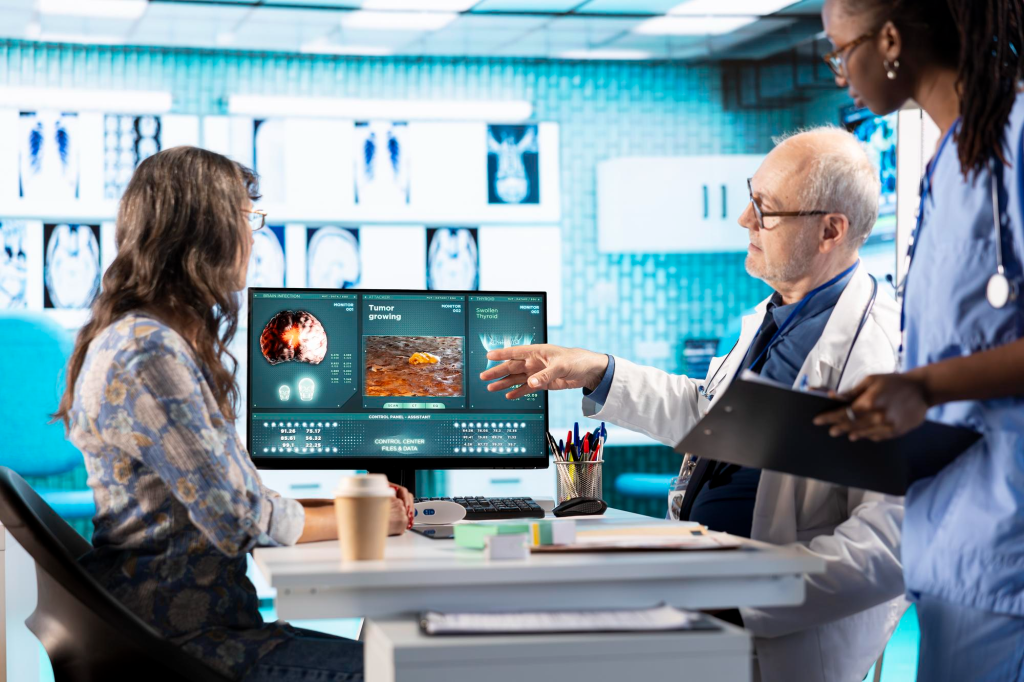
Why Digital Medical Records Are Critical in Modern Healthcare
Paper-based or fragmented digital systems create significant challenges for healthcare providers.
Common issues include:

Inconsistent patient records across systems

Difficulty accessing real-time patient data

Data duplication and errors
Limited collaboration between providers
Compliance risks
Digital EMR/EHR systems solve these challenges by centralizing and standardizing patient information.
EMR vs EHR – Understanding the Difference
Although often used interchangeably, EMR and EHR serve different purposes.
| Aspect | EMR | EHR |
|---|---|---|
| Scope | Single organization | Multiple organizations |
| Data sharing | Limited | Extensive |
| Use case | Internal records | Integrated healthcare ecosystem |
Key takeaway:
EMR focuses on internal clinical data
EHR enables data sharing across providers
Modern systems often combine both capabilities.
Core Capabilities of EMR/EHR Systems
| Patient Health Records | Clinical Documentation | Prescription Management |
|---|---|---|
| Medical history | Physician notes | E-prescriptions |
| Diagnoses and treatments | Treatment plans | Medication history |
| Lab results and imaging | Progress tracking | Drug interaction alerts |
| Data Access and Sharing | Reporting and Analytics |
|---|---|
| Secure access across departments | Clinical performance insights |
| Inter-provider data exchange | Patient outcome tracking Data-driven decision support |
Interoperability: The Backbone of Modern Healthcare Systems
One of the most critical aspects of EMR/EHR systems is interoperability—the ability to exchange data between different systems.
Key standards:
FHIR (Fast Healthcare Interoperability Resources)
Why interoperability matters:
Reduces duplication of tests
Improves clinical decision-making
Architecture of Scalable EMR/EHR Systems
Modern EMR/EHR systems require flexible and scalable architecture.
Core components:
API-driven architecture
Microservices design
Secure databases
Benefits:
High availability
Seamless integration
Integration with Healthcare Ecosystem
EMR/EHR systems are central to healthcare infrastructure.
Cost to Build EMR/EHR Systems
Starting from $12/hour, depending on developer experience and project complexity.
Cost factors:
System complexity
Data volume
Integration requirements
Compliance requirements
Challenges in EMR/EHR Implementation
Despite their benefits, EMR/EHR systems require careful implementation.
Common challenges:
Data migration from legacy systems
Integration complexity
User adoption
Regulatory compliance
We address these through structured development and phased implementation.
Build a Secure and Scalable EMR/EHR System
A well-designed EMR/EHR system is essential for modern healthcare—enabling better patient care, improved efficiency, and secure data management.
Build a future-ready healthcare data system tailored to your organization’s needs.
Frequently Asked Questions
What is the difference between EMR and EHR?
EMR is used within a single organization, while EHR allows data sharing across multiple providers.
Are EMR/EHR systems secure?
Yes, with proper compliance and security measures.
Can EMR/EHR integrate with existing systems?
Yes, modern systems are built for interoperability.
Is cloud-based EMR safe?
Yes, with secure infrastructure and encryption.